
Bouger en Aveyron – Le blog » Archive du blog » 2015 : Le Tour de France en Aveyron.
Author: lostfrance
The Mines part 1
 Where we are in France is very rural and as has been mention has, historically often been overlooked. Its beauty lies in its beautiful rural scenery. But there is another side to the story. The area has sits on a wealth of natural resources including; coal, minerals and thermal springs. Whilst a history of mining is not perhaps such an attraction to tourists as some , it has left its mark, and has helped to make the area what it is today. Our château here in Bournazel might well have fallen into ruins had it not been taken over by the state as a rest home for miners.

The three main towns involved in the mining industry were: Decazeville, Aubin and Cransac.
Retreats | Hot Women
France in mourning
First let me say I am not making any political comment on recent events, but rather I feel proud of the reaction amongst people I know in France. Given that generally the feeling is that the French have a form of xenophobia that starts at the boarders of their home village, and I would have been the first to agree, the dignified protests against the atrocities perpetrated in the name of religion, have risen well above any knee jerk condemnation of a religion or race. People have come together in towns all over the country in a show of solidarity, respect and empathy untainted with bigotry, for les marches républicaine.
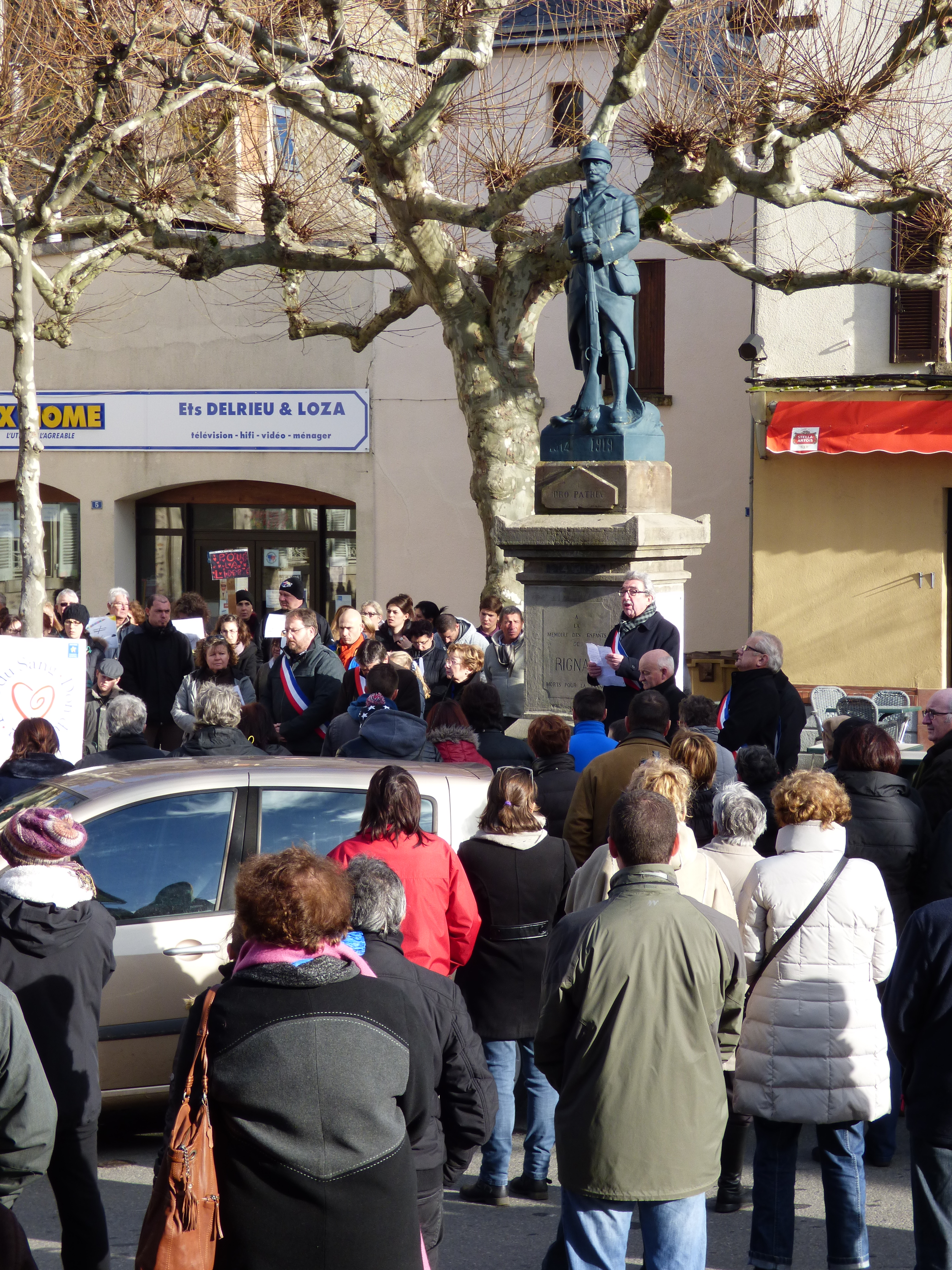
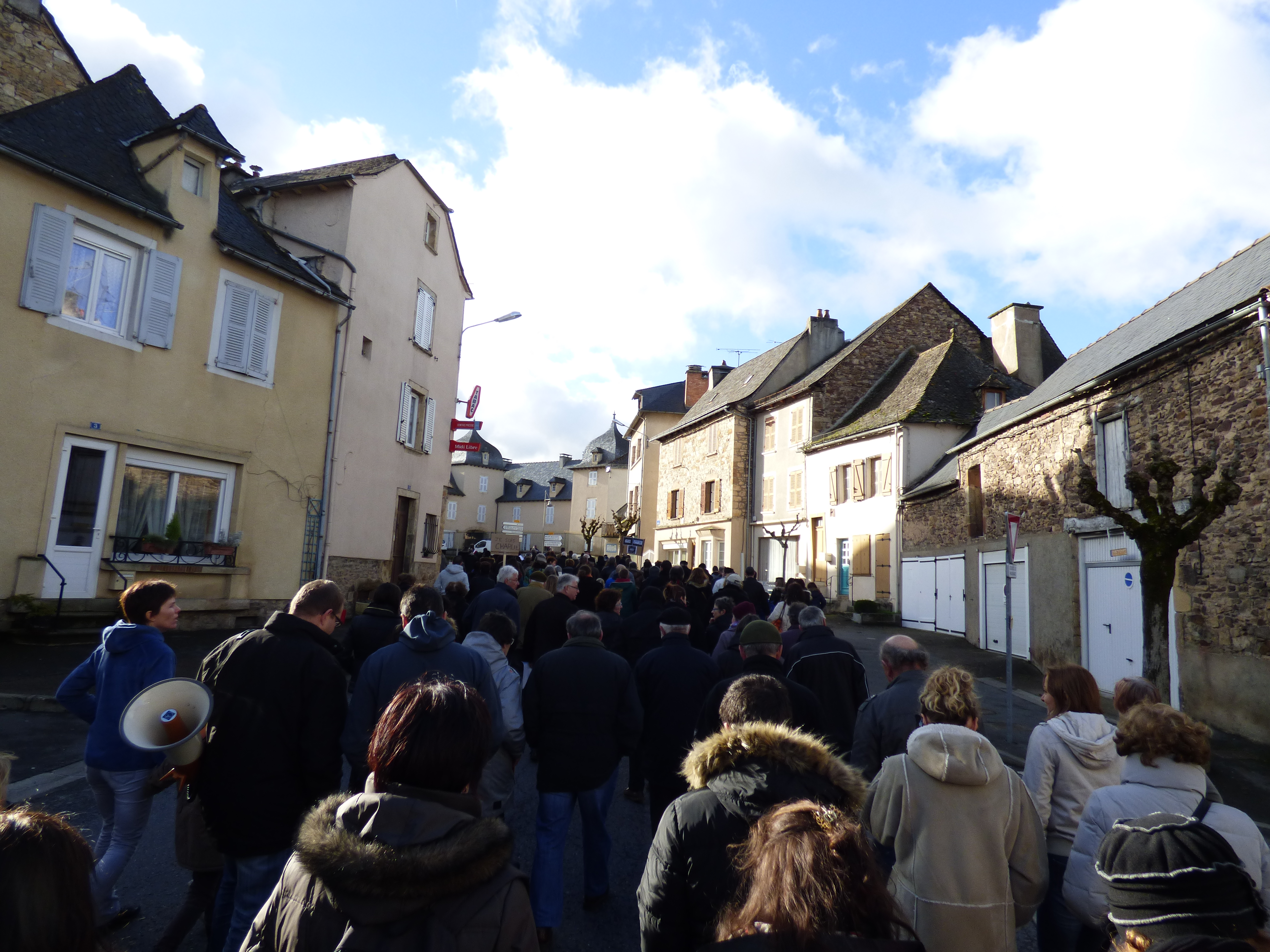 My local town, Rignac,
with a population of less than 2000 people, a very respectable turn out.
And the prefecture Rodez 17000
Article from the Independent on Rodez
SATURDAY 10 JANUARY 2015
Rodez: France’s new cultural attraction
A new museum in Rodez celebrates art and local cuisine, all in one, says Philip Sweeney
PHILIP SWEENEY Saturday 06 September 2014
The southern, sparsely populated département of Aveyron is known for beautiful scenery, from the flower-strewn pastures of the high Aubrac to lush winding river valleys. It’s also renowned for excellent catering: many of the café proprietors of Paris were traditionally Aveyronnais. The region’s few architectural wonders – Notre-Dame Cathedral at Rodez, the abbey of Conques and the slim white motorway in the sky that is Norman Foster’s Millau Viaduct – are cerises on the gâteau. This summer however, the Aveyron acquired a new attraction that manages to encapsulate architecture, art, food, and a sort of distillation of the essence of the Aveyron terroir.
Driving up the hill to the centre of the regional capital, Rodez, you used to pass a large car park, lawns, and a 19th-century bandstand, overlooked by a 1980s mini-Louvre pyramid, the departmental seat of government. For decades this was the town’s pinnacle of architectural innovation.
In place of the car park, there’s now a dramatic line of giant boxes in rust-patina sheet steel, cresting a newly planted slope of moorland grasses and flowers. This is the Musée Soulages, opened in May by the President, François Hollande. It was created to house the life’s work of one of France’s most eminent living artists, Rodez-born Pierre Soulages, creator of huge black canvasses worth tens of millions of euros to American collectors. Post-apocalyptic fortress on the outside and brilliantly successful display space within, the gallery has elevated little Rodez to a cultural big shot.
At the same time, in an artfully distressed metal side wing, the museum’s restaurant is upping the town’s culinary ante. Café Bras is devoted to the work of another Aveyronnais star, Michel Bras. He is the proprietor of the region’s temple of gastronomy, the eponymous Michelin three-starred restaurant perched above the cattle town of Laguiole – also known for its cheese and knives – to the north.

To experience the Bras amalgam of luxury and austerity, innovation and tradition at its most exquisite, I drove up through oak groves, hay fields and hillsides grazed by beautiful chestnut Aubrac cattle to Bras’s glass-sided mountaintop eyrie, to be seated at the kitchen guest table with a helicopter pilot who’d ferried a party up for lunch.
Dinner and a show: Café Bras, at Musée Soulages Dinner and a show: Café Bras, at Musée Soulages Around us, two dozen quietly concentrated young people in white turned out an extraordinarily moist biscuit of east European kasha grain and local cheese in a sauce of truffles and “rancid” olive oil flavoured with aged lard. At a side station, a special aligot stirrer worked at the rich elastic purée of potato, cream and Laguiole cheese, a virtual emblem of Aveyronnais granny cuisine.
The same blend of old-time dishes and state-of-the-art accoutrements characterises the Soulages museum café. This is the Bras interpretation of a modern brasserie, and as at any good brasserie there was a queue when I visited. There was a new Bras invention named the miwam, a sort of stuffed waffle, and a constantly changing repertoire of traditional delights: pascades, thick unctuous pancakes flavoured with onion; three varieties of tripe, once eaten by country folk for breakfast; farçous mini-rissoles and bourriols (sweet potato cakes).
The café is not the only new outpost of the Bras empire, which is becoming something of a gourmet template for south-west France. I travelled to Rodez via Toulouse to visit the brand new Capucin Signe Bras, a rather soigné fast-food café in the chic shopping area around the Victor Hugo market. The capucin is a Bras invention – a conical buckwheat crêpe filled with daily changing combinations: aligot (mashed potato with melted cheese and garlic) with truffle sauce, Roquefort and pears. It’s named after a traditional Aveyronnais cooking implement, a container used to drip fat on to grilling meat, which inspired the shape of the machine Bras designed to turn out his new fast food.
To trace the capucin’s genealogy, I followed the Bras trail south from Rodez down the A75, the wonderfully empty autoroute which swoops through the Massif Central. Just before the spidery, white immensity of the Millau Viaduct, a stone-and-glass converted farm on the hillside constitutes Bras’s take on motorway services, Goûter l’Aveyron. Here, the prototype capucin machine works like a Gatling gun, while cabinets display the finest produce of the region. And not just food: the famous horn-handled Laguiole knives feature prominently. Michel’s brother André, director of the motorway complex, used to run the Forge of Laguiole, which relaunched local production of the knives in the 1980s.
Apart from grub, the Bras outlets offer another considerable resource for the food tourist: a personal address book of the region’s food producers. Source notes may now be a cliché of every UK high-street coffee retailer, but the Bras family take their suppliers very seriously, listing by name the providers of everything from tripe to tomatoes.
The Bras drinks listing is equally impressive: the best of the local wines of Marcillac and Entraygues-le Fel, local gentiane and Ratafia aperitifs, flower infusions …. In the lovely little river town of Saint Geniez d’Olt I visited Bras’s supplier, the Olt Brewery. Proprietor Sebastien Blaquiere was mulling over the plans for the derelict 19th-century café he’s restoring and the bulging order book for his elderberry sodas, Aubrac beers and Aveyron cola. A black lemonade for the Soulages Museum – a homage to the great artist – is on the backburner, but the way business is shaping up in Rodez, it must be heading for the café’s drinks list soon.
Getting there
Philip Sweeney travelled with Voyages SNCF (0844 848 5848; uk.voyages-sncf.com). Fares from London St Pancras to Toulouse (via Paris Gare du Nord and Austerlitz) start at £119. Rodez is served by Ryanair (0871 246 0000; ryanair.com) from Stansted.
Visiting there
Musée Soulages (00 33 5 65 73 82 60; musee-soulages.grand-rodez.com). Open 11am–6pm at weekends, 10am-noon and 2-6pm from Tuesday to Friday, closed Mondays; admission €7.
Michel Bras: bras.fr
More information
tourisme-aveyron.com
tourism-midi-pyrenees.co.uk
The Independent travel offers: Discover a world of inspiring destinations
http://www.independent.co.uk/travel/europe/rodez-frances-new-cultural-attraction-9713785.html
Food in Aveyron
 As I have often in the past been quite rude about the local food, perhaps the time is right to redress the balance a little, after all credit is due to an area where people have always managed to make much out of very little (sometimes in more ways than one!)
I have already mentioned aligot, “the king of foods” as my brother has called it, a rib clinging mashed potato dish certainly designed to keep you going through a cold winters day. But the great advantage in Aveyron is the care and “heart” obvious in so much of the produce.
There are many small scale producers, the landscape, tradition and the shallow soil, has meant that large scale production has always been difficult and the lack of an efficient transport network led to a certain amount of insulation from the rest of France. This means that now there are lots of small producers still sticking to traditional methods and producing some great quality products.
There is a proliferation of “bio” (organic) suppliers and small farms producing local duck, goose and pork to make the traditional local dishes, all found at the “Marchés des Producters de Pays”
 Some enterprises have also got together to form “Drive-Fermier”, where a variety of foods (pork, duck, ice cream, cheese…..) can be ordered on line direct from the producer and then picked up from a central point.
Specialities include Goose and duck confit, foie gras, Estofinado, made with salted and dried cod “stockfish” Cheeses such as Bleu des Causses Laguiole, Roquefort cheese or Cabecou (goat’s milk cheese) local wines, local honey,
 Cakes include Fouance, a bit like Madeira cake, gateau à la broche, a batter based cake cooked on a spit in front of the fire.
As well as an abundance of walnuts, chestnuts and mushrooms.
http://tourismemidipy.wordpress.com/2014/10/17/gaillac-vin-sur-vin-pour-laccueil/
http://www.drive-fermier.fr/centre-aveyron
http://www.marches-producteurs.com/aveyron
What a difference a decade makes, part 2
So, as I said in part 1, a decade ago the mornings looked a little different to how they look now!
2004/5
6 get up; prepare son and self.
6.45 leave house and struggle through traffic to nursery
7ish (very ish, given the traffic variables!) have son dragged screaming from arms.
7.05 ish start drive to work, this was always the big variable! The drive, if done in the middle of the night, from St Albans to north Watford is 15 minutes, but given that the towns are on junctions of the M25, the M10, and the M1…….well what can I say, an average journey time of an hour, but you need to leave an 1 hour and a half to be sure.
? arrive at work, usually running and clutching my mobile, giving instructions, trying to avert the latest disaster caused by students or staff!
8.30 morning meeting
Teaching and admin and firefighting until 6/7 or 9.30 (if evening classes)
Fight way back home, dinner, marking, preparation, large amounts of wine, bed!
2015
7.30 get up, (son, now 13 prepares himself! ), breakfast, leisurely shower, check Facebook.
8.35 leave for work on foot, going via chickens to let them out and collect eggs.
8.45 arrive at work, receive instructions
1.45 break (didn’t get one of those in UK!)
3.30 back to work
5 leave work!
How things have changed! Not only that but here are a few photos of the “commute”
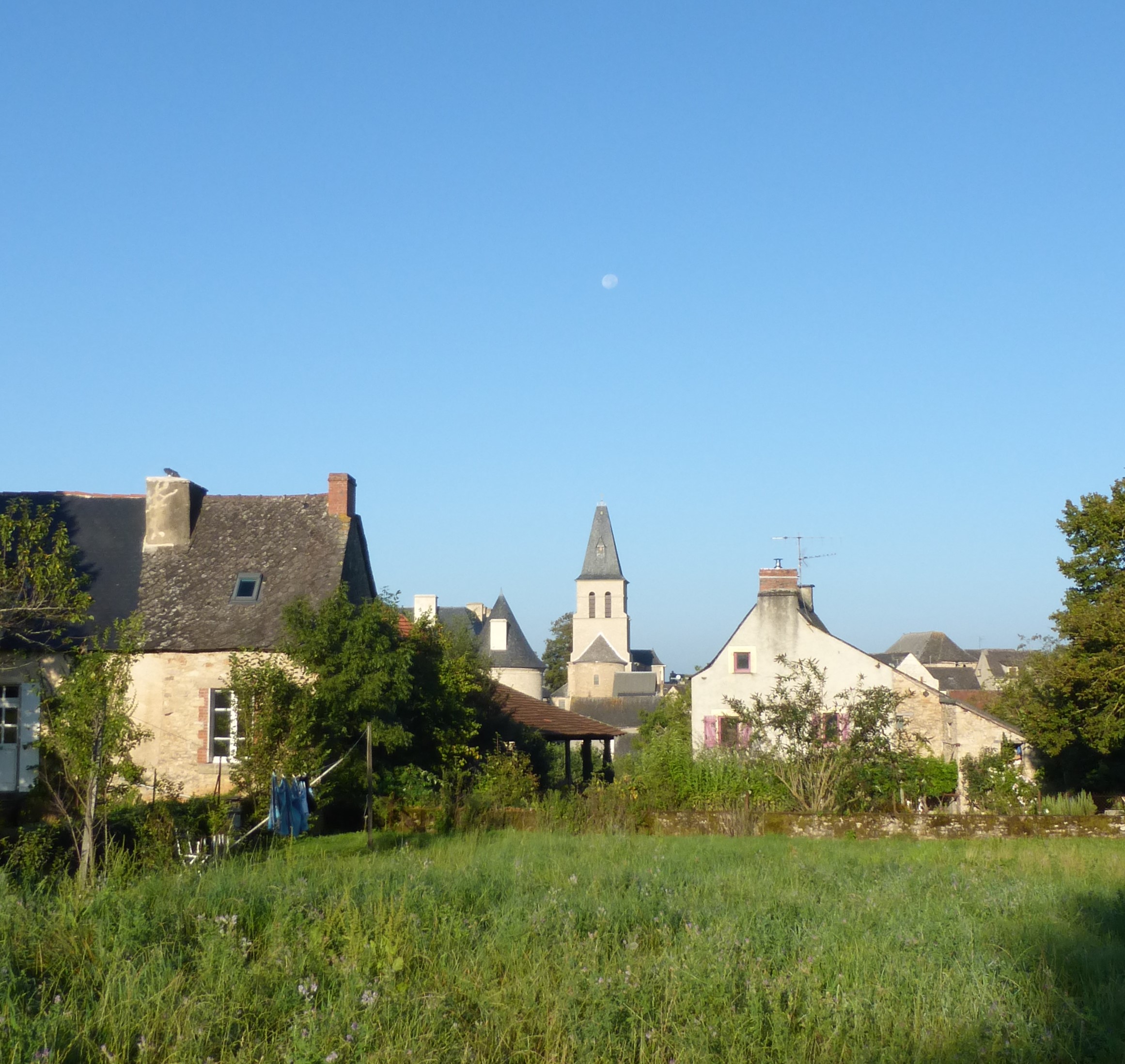
 The village of Bournazel
 Dawn over the fields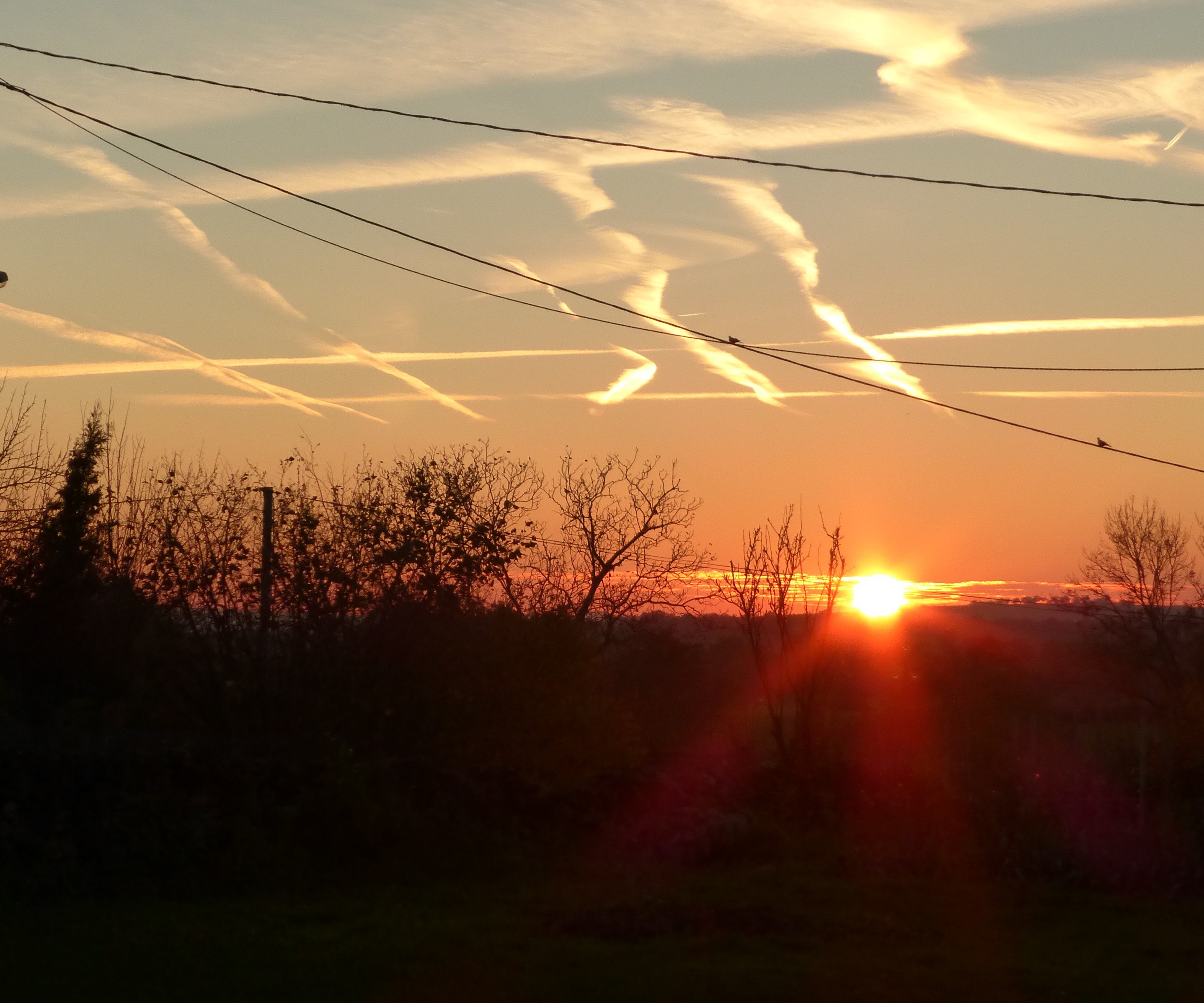
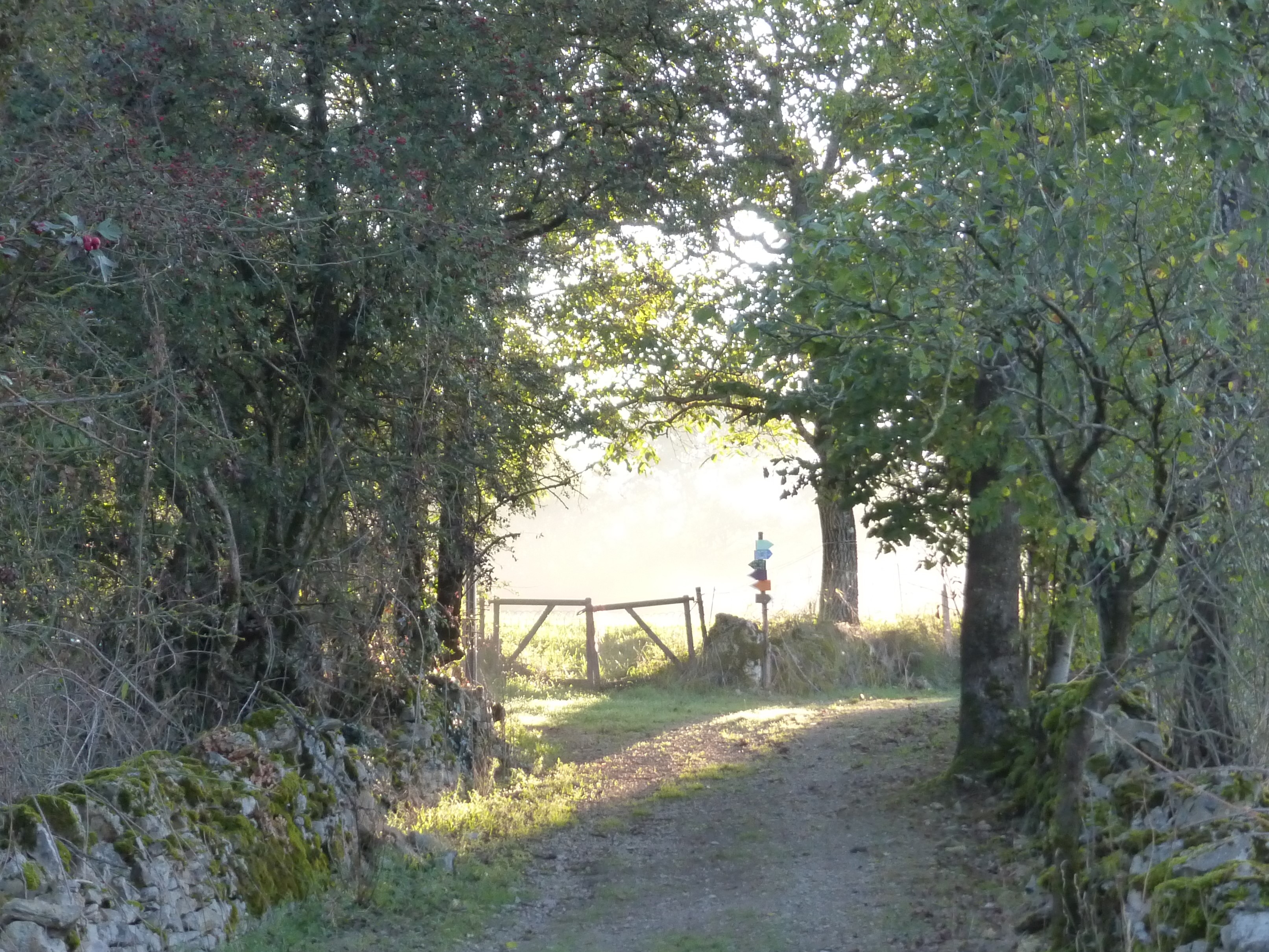 Le chemin de l’école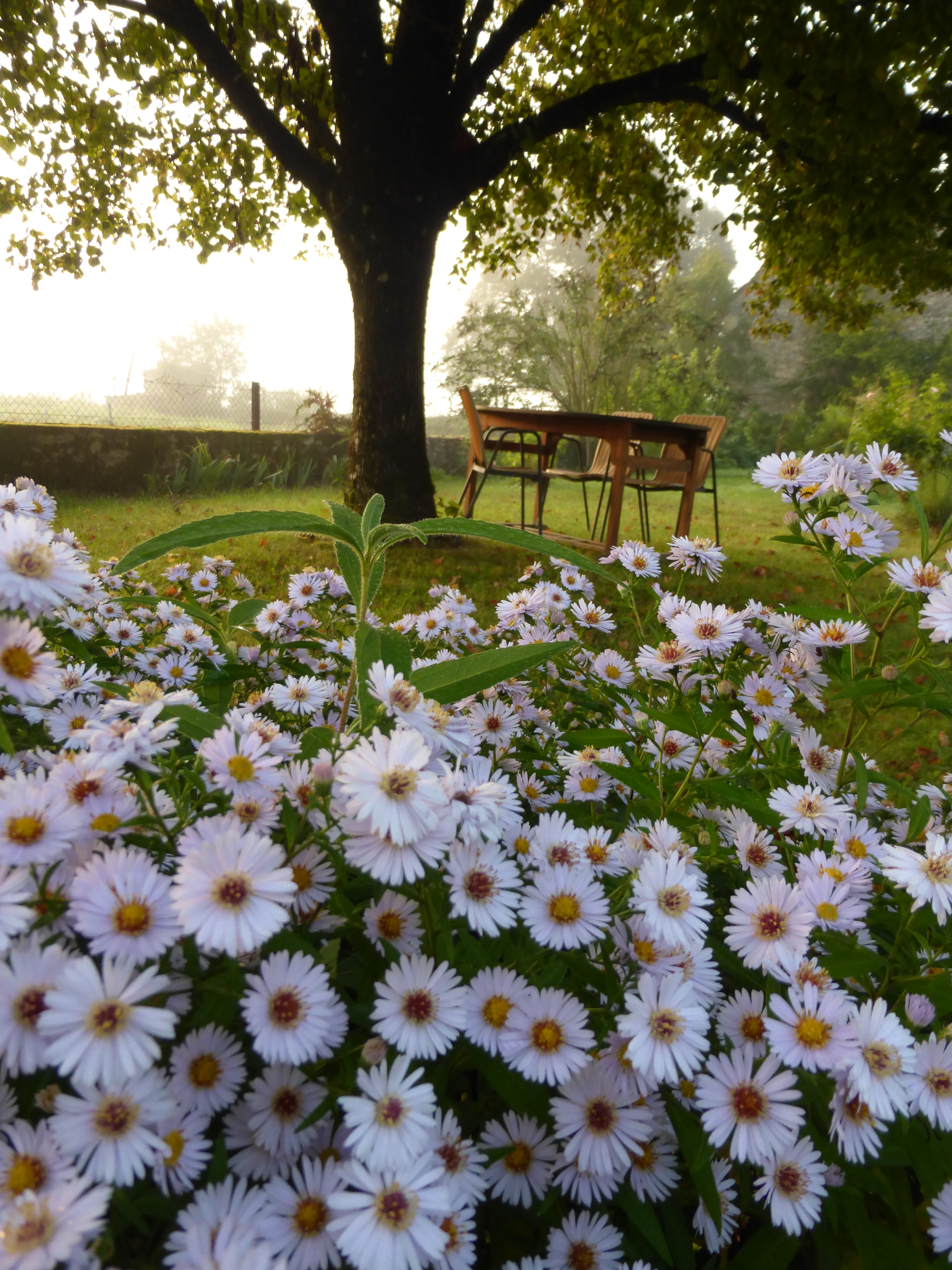

What a difference a decade makes! Part 1
In July this year we will have lived here, in Bournazel for 10 years, the time has come perhaps to reflect on what we “left behind”.
The most important change has of course been the distance that we have put between ourselves and our families, obviously the most negative part of our “big move”, but that is maybe better left for another day. What I have been thinking about a lot recently is the change in our style of living.
When I left the UK, I was in charge of a department in a very large further education college, I am now a classroom assistant and dinner lady, that’s quite a change! We of course made a conscious decision to change our priorities, and thought long and hard about this massive change in our lives (although arriving without jobs, no savings and still with a couple of unpaid of credit cards, not to mention a 4 year old in tow it might not have appeared that way!) but I don’t think you can ever be completely ready for the culture shock of living in a new country and maybe that’s a good thing!
There are a lot of people that arrive from the UK to start a new life in France, but there are also a lot who don’t stay. There are a lot of reasons for that: people underestimate the cultural differences, international travel is more difficult than from the UK, French is a hard language to learn (I know it’s not Chinese, but it’s still hard!), many people move from an urban environment to the countryside, nobody ever says your name right, no crackling on your pork and many more!
Packing
Off to UK to see the family for a week. Given that I probably travel more in a year than most people in the village travel in a decade you’d think I’d be better at packing. That is to say I’m quite good at packing, it’s just starting and finishing I have a problem with!
First find the right bag. I have a bit of a bag obsession so there’s quite a choice. Which is easier to carry? Is this bag heavier? is that bag heavier? After measuring and weighing all the bags I go for the purple one, ‘cos it’s prettier. Now that’s done, I should really start putting things in it……I’ll just have a cup of tea…….Now… oh….better just double check the weight allowance…just a quick game of Candy Crush while I’m on the computer.
OK, good 20 kilos, that’s loads…..we’ll just keep to the basics though, more room to bring things back…..mind I really love that pink top, oh and that pair of trousers and the green dress, and….none of it goes together……
This is ridiculous, think I’ll just go and write something on my blog, clear my head.
Start again…..think I might start with toiletries etc……..think I might just give the bathroom a bit of a clean….
Right, I’ll just have a cup of tea……did I pack that black top? Better check…..everything out!
Start again, this is silly, it’s getting late and I really don’t need much if we’re staying with the family…….
All done, 10 kilos, great.
Next day…….loads of room in that case…..I’ll just take this jumper…..just in case, and that coat……
Arrival at airport,”Your bag weighs 22 kilos madam that will be 30 Euros” ….Doah!
Peyrusse le Roc
 Peyrusse le Roc is quarter of an hour away from us and somewhere I really like to take visitors.
It’s rarely very busy as it isn’t very well known, but it is really impressive as you can see from the photo.
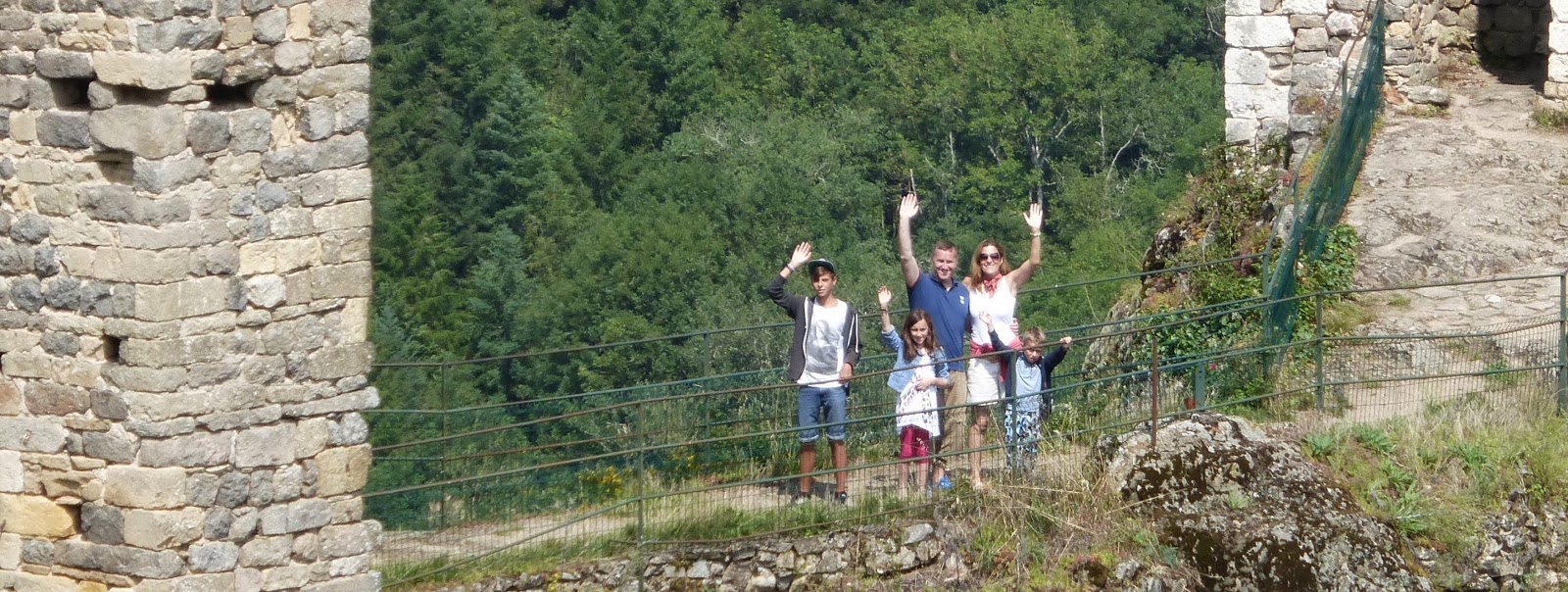
This being Aveyron there is not too much worry about health and safety either you can clamber up the side of it, if you’re that way inclined and one of my nephews did! I don’t have that on film, I was too busy screaming hysterical, but some more sensible members of the family are pictured climbing what looks like a very precarious ladder to me!
The towers are what’s left of the fortifications, but the vestiges of the rest of the town can still be seen. The full walk takes about an hour and a half, the first half of the walk takes you gently down into the valley, but be aware it is lulling you into a false sense of security the second half takes you back up in a much more brutal manner and is not for the faint hearted. (although it does have the advantage of wearing the kids out!) About half way down are the ruins of the old abbey, lovely place for a picnic.
The History Bit
The written records of Peyrusse go back to 767, when it was besieged by Pepin le Bref who took possession of it from Waïfe the Visigoth chieftain in August of that year.
It is mentioned through the centuries Robert II of France stayed there in 1031.
In 1269 Peyrusse received Alphonse de Poitiers and the count of Rodez came to pay tribute.
In 1369, a Charter was granted to the town by .Charles V
The city of Peyrusse had up to 40 noble families, as well as six notaries, a money changer, and several factories. Trade was important (several fairs and two markets per week). It was the chief town of the larger Bailiwick of Rouergue (106 parishes) and housed within its walls 187 men in arms and 4 Knights. Peyrusse also exploited the silver mines that had existed since antiquity.The city’s population started to wane during the 13th century .
What remains today is a credit to a small group of dedicated volunteers who had the foresight to step in in the nick of time.
 lostfrance